Female Voices in Art: Jungyoon Yang, Art Historian
"I have always been fascinated by how women's positions have shaped their ways of seeing."
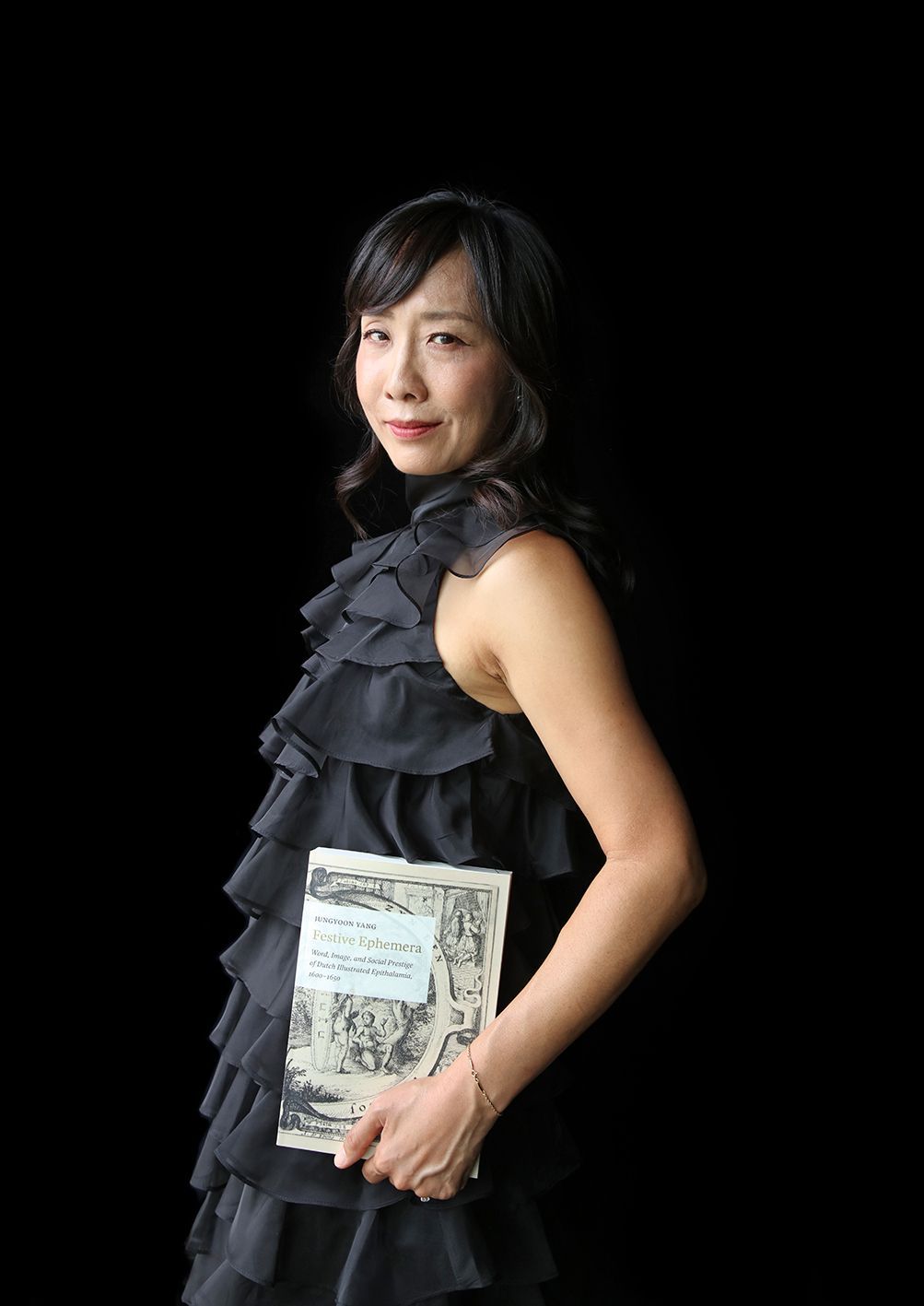
Jungyoon Yang (b. 1974, Seoul, South Korea) is an art historian specialising in seventeenth-century Dutch art. She received her PhD in Art History from the University of Amsterdam in 2026 with a dissertation on illustrated epithalamic booklets produced in the Dutch Republic between 1600 and 1650, bringing together approaches from visual and material culture, book history, and social history. Yang studied European art history at Aoyama Gakuin University in Tokyo and aesthetics and art history at Kyoto University before receiving her second MA in Art History, cum laude, from the University of Amsterdam in 2007, with a thesis on theatricality in Jan Steen’s history paintings. Alongside her academic work, she has pursued a career in cultural diplomacy and international education. From 2016 to 2022, she served as Chief Representative Officer of Nuffic Neso Korea, fostering academic and cultural exchange between the Netherlands and South Korea. She is the author of Intimate Art History (Seoul, 2017), the first Korean-language monograph devoted to seventeenth-century Dutch art.
Could you tell us something about your role in the art world?
I came to Dutch art by a rather unusual route. I was born in Seoul and first encountered it seriously while studying in Tokyo, through the classes of Professor Tatsushi Takahashi. I somehow found myself completely drawn into that world. I continued studying Dutch art in Kyoto, and after almost ten years in Japan, I came to Amsterdam, where I did a second Master's in art history. My research eventually led me to a collection of seventeenth-century Dutch wedding booklets at the National Library in The Hague. They had largely been studied for their poetry, while their illustrations had received much less attention. I began with the images, but the research gradually expanded to include words and the entire network of people behind these objects, including brides and grooms, their families, poets, artists, calligraphers, and publishers.
There is another experience that shaped how I see my field. For several years, I worked for a Dutch public organisation whose Seoul office was based at the Dutch Embassy. That allowed me to see the Netherlands from a completely different perspective, not only through art and culture, but through education, agriculture, trade, politics, and many other aspects of the country. I often thought of our work quite simply as, “We are selling the Netherlands”. It made me much more conscious of cultural branding and of how culture forms part of a larger national story. So I would say my place in the art world is somewhere between the microscopic and the panoramic. I love going into an archive and tracing small, almost invisible relationships, but I also want to understand what those small traces can tell us about a culture, a society, or the way a country imagines and presents itself.
What did you enjoy about being a part of this project?
When I first came to Amsterdam twenty years ago, a Dutch portrait photographer heard that I had just arrived from Seoul and asked to photograph me. We went to Oud Amelisweerd, the historic country house near Utrecht, where she dressed me in a way that somehow evoked Vermeer and photographed me in front of its beautiful Chinese wallpaper.
Now, twenty years later, just as I am completing my PhD in Amsterdam, Carla is photographing me at another very particular moment in my life. I am curious to see these two portraits side by side, the person who had just arrived here and the person I am now, and to see what twenty years have done, or revealed, in between.
Do you have a favourite artist?
Titian. I have always been drawn to the women he painted. There is something about their beauty, their presence, their sensuality, and how extraordinarily alive they feel. I never tire of looking at them.
What is your earliest memory involving art?
I grew up in a large family, and one of my uncles was a passionate collector of Korean antiques. Whenever he brought something new home, calligraphy, old furniture, celadon, or white porcelain, I was always the first to run over and look. I must have been five or six. Strangely, what fascinated me most was not always the object itself, but the faces of the adults looking at it. They became incredibly serious. I remember them holding a piece of calligraphy up to the light, examining the thin paper, the ink, and the brushwork, trying to decide whether it was genuine or not. As a child, I kept wondering, why are they looking so intensely? What are they seeing that I cannot see? I think that curiosity has stayed with me ever since, not only about objects, but about the act of looking itself.
Do you have any special thoughts about the position of women in the art world?
I have always been fascinated by how women's positions have shaped their ways of seeing. I often think of Murasaki Shikibu, the author of The Tale of Genji, whom I have admired for a very long time, and of the twelfth century illustrated handscrolls based on her work. She lived within a highly restricted courtly world, and yet created from within it an extraordinarily rich and complex world of dress, letters, relationships, gestures, jealousy, desire, silence, and the smallest movements between people. Perhaps that is what interests me most about women in art. A restricted position does not necessarily produce a restricted vision. Sometimes it can make the act of seeing extraordinarily precise.
What are you wearing, and tell the story behind it?
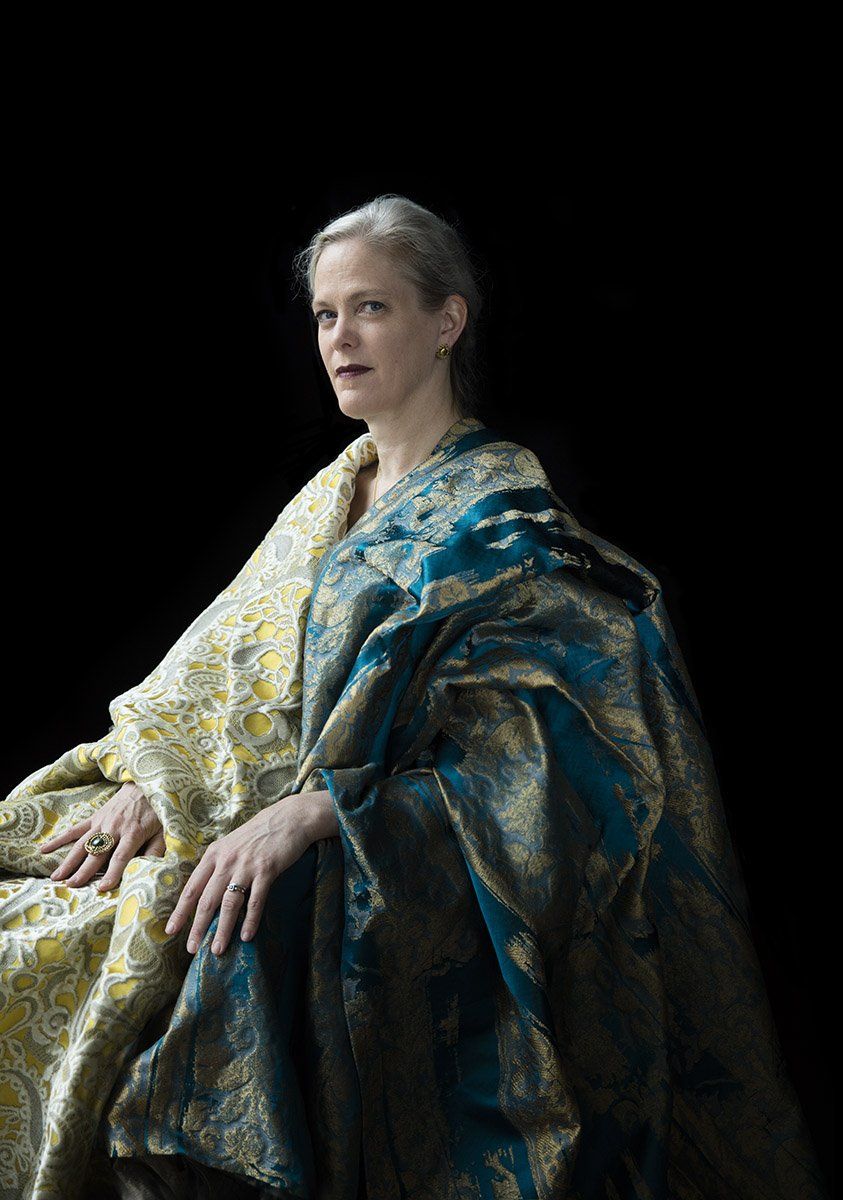
This is actually what I am going to wear for my PhD defence in two weeks. I wanted something celebratory, with layers and a touch of extravagance that reminded me of the ruffs in seventeenth century portraits. What I love most is the very long ribbon at the back. After such a long journey towards this moment, I loved the idea of tying a large bow around myself and turning myself into a gift box for the day. And there is something else I am wearing that you cannot see: my favourite perfume, Frédéric Malle's Portrait of a Lady. What better day to wear it than the day Carla is making my portrait?
What are you currently working on?
I have just completed my PhD on illustrated wedding booklets in the Dutch Republic between 1600 and 1650. These small objects brought together an extraordinary number of people: brides and grooms, their families, poets, artists, calligraphers, and publishers. At times, working on them felt like listening to a huge orchestra, with so many voices sounding at once. After spending so long with that orchestra, I now find myself drawn to something closer to a string quartet, something smaller and more intimate, where individual voices can be heard more clearly. I have never really been interested in following only one great artist. I am increasingly curious about lesser known people and the cultural capital they created, accumulated, and passed on.
Could you mention a project, an institution that, or a person who has been important or inspiring for your career and why?
There have been many people, but if I had to name one, it would be Michiko Fukaya. We met almost twenty five years ago as fellow students at Kyoto University, and she now teaches seventeenth century Dutch art at Kyoto City University of Arts. There was something very special about studying Dutch art together in Kyoto, perhaps the most profoundly Japanese of cities. Surrounded by temples and centuries of Japanese tradition, we were constantly asking ourselves how we could understand this distant world of seventeenth century Dutch art and somehow make it our own. Michiko has been beside me, in one way or another, ever since. With her, I can talk about Dutch art in Japanese, English, or Dutch, and there is almost nothing about the subject that we cannot share with each other. To have someone with whom you can think so deeply, over so many years, is an extraordinary privilege. I do not think I could have come this far without her.
Female Voices in Art: Interview with Mariana Varchuk, Curator Khanenko National Museum of Arts, Kyiv